5 Steps to Ace Your FAANG Interview: Checklists for DSA, LLD & HLD
Stop grinding blindly. Follow this structured 5-phase checklist to master Data Structures, Low-Level Design, System Architecture, and behavioral questions for major tech company interviews.

The Ultimate FAANG Interview Guide: DSA, System Design & Behavioral
Acing the interview process at major tech companies—often referred to as FAANG (Facebook/Meta, Amazon, Apple, Netflix, Google) or MANGA—requires a blend of rigorous technical preparation, strategic communication, and an understanding of distributed systems at a massive scale.
Landing a role at these companies, especially in highly competitive global tech hubs like London, Zurich, Berlin, or Amsterdam, is a marathon, not a sprint. This guide provides a comprehensive, end-to-end playbook for mastering Data Structures and Algorithms (DSA), Low-Level Design (LLD), High-Level Design (HLD), and the Behavioral rounds.
Phase 1: Mastering Data Structures and Algorithms (DSA)
DSA is the great equalizer in tech interviews. Whether you are a junior developer or a seasoned engineering leader, you will be expected to write clean, bug-free, and highly optimized code on a whiteboard or a shared text editor within a 45-minute window.
The Strategy: Pattern Recognition Over Memorization
Grinding thousands of LeetCode problems blindly is an inefficient use of your time. The secret to acing the coding round is internalizing algorithmic patterns. Once you recognize the underlying pattern, you can solve any variation of the problem.
Focus heavily on these core patterns:
- Sliding Window: Essential for array or string problems involving contiguous subarrays (e.g., finding the longest substring without repeating characters).
- Two Pointers: Highly effective for sorted arrays or linked lists, often reducing time complexity from quadratic to linear.
- Fast and Slow Pointers (Tortoise and Hare): The go-to approach for cyclic detection in linked lists or arrays.
- Merge Intervals: Critical for scheduling problems or managing overlapping timelines.
- Top 'K' Elements: Whenever a problem asks for the "top," "smallest," or "most frequent" elements, immediately think of using a Heap (Priority Queue).
- Tree Breadth-First Search (BFS) & Depth-First Search (DFS): You must be able to traverse trees and graphs fluidly. Practice both recursive and iterative approaches.
Prerequisite Checklist
Before diving into daily problem-solving, ensure you have these foundational elements locked in:
- Select and Master One Language: Choose a language you are most comfortable with (like Java) and thoroughly master its standard library, especially its Collections framework (HashMaps, PriorityQueues, Deques).
- Understand Big O Notation: You must be able to instantly calculate and explain the time and space complexity of every line of code you write.
- Set Up a Spaced Repetition Schedule: Plan to revisit difficult patterns (like Dynamic Programming or Graph algorithms) every few days rather than cramming.
- Curate a Targeted Problem List: Bookmark the "Blind 75" or "Grind 75" lists to focus strictly on high-yield interview questions.
- Simulate the Interview Environment: Practice writing code on a plain text editor or whiteboard without the help of an IDE's autocomplete or syntax highlighting.
Recommended DSA Resources
- LeetCode: The industry standard. Focus on the "Top Interview 150" and company-specific tags.
- Grokking the Coding Interview: Patterns for Coding Questions: A phenomenal text-based course that teaches you the patterns rather than just giving you the answers.
- Grind 75: A dynamic study plan that curates the most impactful LeetCode questions based on how many weeks you have left until your interview.
- NeetCode: An incredibly helpful platform that organizes LeetCode problems by pattern and provides exceptional video explanations.
Phase 2: Low-Level Design (LLD) and Machine Coding
For backend-heavy engineering roles, the Low-Level Design round tests your ability to translate abstract requirements into working, extensible, and maintainable code. Interviewers want to see how you structure classes, manage state, and handle concurrency.
The Blueprint for LLD
At senior levels, interviewers are looking for code that is production-ready. Writing a monolithic function will result in an immediate failure. You must demonstrate a mastery of object-oriented programming (OOP).
- SOLID Principles: Your code must adhere to Single Responsibility, Open-Closed, Liskov Substitution, Interface Segregation, and Dependency Inversion.
- Design Patterns: You should intuitively know when to apply the Strategy Pattern (e.g., for different payment methods), the Observer Pattern (e.g., for event notifications), or the Factory Pattern (e.g., for object creation).
- Concurrency and Thread Safety: If you are designing a system like a movie ticket booking application or a parking lot, you must account for race conditions.
- Framework Fluency: Leveraging robust paradigms from modern ecosystems—such as utilizing dependency injection concepts akin to what you would find in a Spring Boot application—shows that you know how to build modular software.
Prerequisite Checklist
Ensure these core competencies are sharp before tackling full LLD mock interviews:
- Review Core OOP Concepts: Solidify your understanding of Abstraction, Encapsulation, Inheritance, and Polymorphism.
- Memorize the Top 5 Design Patterns: Have the exact implementation of Singleton, Factory, Strategy, Observer, and Builder patterns memorized.
- Master Concurrency Primitives: Understand how multithreading, mutexes, semaphores, and thread pools work in your chosen programming language.
- Practice UML Sketching: Be able to quickly draw clear Class Diagrams and Sequence Diagrams to communicate your architecture before coding.
- Create Boilerplate Templates: Develop mental (or physical) templates for structuring a new project quickly, organizing your models, services, and controllers logically.
Recommended LLD Resources
Head First Design Patterns: A highly visual, engaging book that breaks down complex design patterns into memorable concepts.
Refactoring: Improving the Design of Existing Code: Martin Fowler's masterpiece on writing clean code and improving legacy systems.
InterviewReady: Offers excellent machine coding and LLD problem sets that mimic actual interview environments.
Phase 3: High-Level Design (HLD) / System Architecture
The System Design interview is the ultimate differentiator. It is where you transition from being a coder to an architect. At the Senior Staff level, the expectations are incredibly high: you aren't just putting boxes on a whiteboard; you are defending tradeoffs, predicting bottlenecks, and ensuring high availability.
The Anatomy of a Scalable System
When asked to design systems like a globally distributed rate limiter, a news feed, or a ride-sharing backend, structure your approach:
- Requirements Clarification (5 mins): Pinpoint the exact scope. What is the Read/Write ratio? What are the latency requirements?
- Back-of-the-Envelope Estimation (5 mins): Calculate QPS (Queries Per Second), storage requirements, and bandwidth to prove the system requires a distributed architecture.
- High-Level Architecture (10 mins): Draw the core components—API Gateways, Load Balancers, Application Servers, and Databases.
- Deep Dive & Tradeoffs (20 mins): This is where you shine.
- Data Streaming: If designing a system requiring real-time analytics or continuous data ingestion, demonstrating expertise in event-driven architectures is a massive advantage. Discussing how to guarantee exactly-once processing using Apache Flink, decoupled message queuing via Apache Kafka, and efficient data serialization using Avro will set you apart from candidates who only know basic REST APIs.
- Database Selection: Know exactly when to use an RDBMS (Oracle, PostgreSQL) for ACID compliance versus a NoSQL wide-column store (like Cassandra) for high-write, distributed scale.
- Caching: Discuss caching strategies (Write-through vs. Cache-aside) using Redis or Memcached.
Pro Tip: Teaching or writing courses for other developers is a fantastic way to solidify your own understanding of architecture. The act of breaking down complex backend concepts into a handbook or curriculum forces you to master the underlying mechanics, which pays massive dividends during an HLD whiteboard session.
Prerequisite Checklist
System design requires broad industry knowledge. Check off these prerequisites to build a solid foundation:
- Understand the CAP Theorem: Know the tradeoffs between Consistency, Availability, and Partition Tolerance, and which databases favor which.
- Learn Database Internals: Understand how indexes work (B-Trees), the difference between row-oriented and column-oriented storage, and replication strategies.
- Master Networking Basics: Be comfortable explaining DNS, TCP/UDP, HTTP/2, WebSockets, and how Load Balancers operate at Layer 4 vs. Layer 7.
- Study Distributed Paradigms: Familiarize yourself with distributed consensus (Paxos/Raft), consistent hashing, and leader election.
- Adopt a Standard Whiteboard Framework: Commit to a structured 45-minute timeline: Requirements (5m) -> Estimations (5m) -> High-Level Design (10m) -> Deep Dive & Bottlenecks (20m) -> Wrap Up (5m).
Recommended HLD Resources
- Designing Data-Intensive Applications (DDIA): The undisputed bible of system design by Martin Kleppmann. Read this cover to cover.
- ByteByteGo (Alex Xu): Incredible visual explanations of complex architectures. His books, System Design Interview – An Insider's Guide (Volumes 1 & 2), are mandatory reading.
- Grokking the System Design Interview: A structured, step-by-step breakdown of classic design problems like designing WhatsApp or Twitter.
Phase 4: Behavioral Interviews and Cultural Fit
Many brilliant engineers fail FAANG interviews because they underestimate the behavioral rounds. Companies like Amazon index heavily on their Leadership Principles, while Google looks for "Googliness" (navigating ambiguity, doing the right thing).
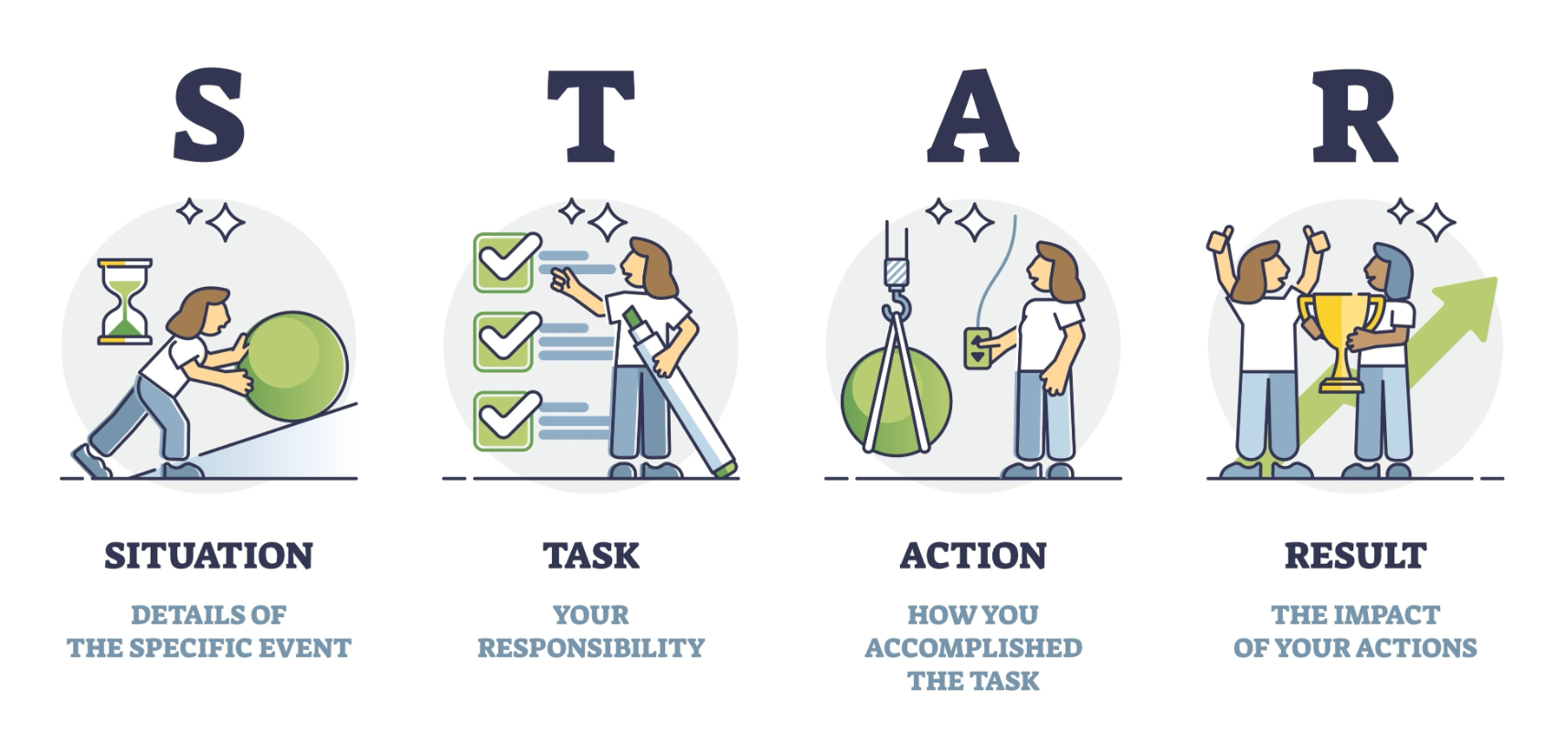
The STAR Method
Never answer a behavioral question with hypotheticals. Always use the STAR framework to tell a structured, compelling story from your past:
- Situation: Set the scene. (e.g., "Our real-time streaming pipeline was dropping 5% of critical financial events during peak load.")
- Task: What was your specific responsibility? (e.g., "I needed to re-architect the data ingestion layer to ensure zero data loss without increasing latency.")
- Action: What exact steps did you take? Use "I", not "We". (e.g., "I implemented a Kafka-based buffer and tuned the Flink consumer partitions...")
- Result: What was the quantifiable outcome? (e.g., "Data loss dropped to zero, and we reduced processing latency by 40%.")
Prepare a "Story Grid" before your interview. Map 5 to 7 strong career stories to common themes like: resolving a conflict, failing and learning, taking initiative, and pushing back on leadership.
At a senior or staff level, your stories should highlight systemic impact, cross-functional leadership, and technical evangelism. For instance, creating comprehensive documentation, writing internal courses, or authoring handbooks to upskill other developers are incredibly strong indicators of a multiplier mindset.
Prerequisite Checklist
Preparation is key to sounding confident and authentic:
- Draft a "Story Grid": Create a matrix matching 5-7 of your best career projects to common behavioral themes (Failure, Conflict, Leadership, Ambiguity).
- Quantify Your Impact: Ensure every "Result" in your STAR stories includes hard metrics (e.g., "reduced latency by 40%," "scaled to handle 50,000 TPS").
- Study the Company's Core Values: Map your stories directly to specific principles, such as Amazon's Leadership Principles or Google's "Googliness."
- Focus on "I" Instead of "We": Practice framing your narratives around your specific technical contributions and architectural decisions, even within a team setting.
- Prepare Reverse Questions: Have 3-4 insightful questions ready to ask the interviewer about their engineering culture, system bottlenecks, or team dynamics.
Phase 5: The Application Playbook
When you are ready, applying directly through the career portals is the first step. Ensure your resume highlights quantifiable achievements, the scale of the systems you've built, and your exact technical stack.
Here are the direct job portals for the major tech companies. Filter these by your target locations and roles:
- Meta (Facebook): Meta looks for builders who move fast. Their portal allows you to search globally across all specialized engineering verticals.
- Amazon: Amazon hires heavily based on Leadership Principles and scale. You can filter for Software Development roles across their global hubs.
- Apple: Apple focuses on deep domain expertise, secrecy, and delivering hardware-software synergy. Look into their Software and Services or Information Systems & Technology teams.
- Netflix: Netflix is famous for its "Freedom and Responsibility" culture and generally only hires highly experienced senior engineers capable of managing massive, global streaming infrastructure.
- Google: Google values rigorous computer science fundamentals, algorithmic problem-solving, and building infrastructure that scales to billions of users.
Preparing for these interviews is a massive undertaking, but entirely achievable with a structured approach.
Prerequisite Checklist
Before submitting a single application, ensure you have completed these steps:
- Optimize Your Resume: Keep it strictly to one or two pages, focusing heavily on impact, scale, and specific technologies rather than passive responsibilities.
- Update Your Professional Profiles: Ensure platforms like LinkedIn reflect your target roles and locations, making you easily discoverable by technical recruiters.
- Secure Internal Referrals: Tap into your network to get a referral; candidates with referrals are significantly more likely to get the initial recruiter screen.
- Organize an Application Tracker: Use a spreadsheet to track the companies you've applied to, the dates, the specific roles, and the current status of each application.
- Sequence Your Interviews: Schedule interviews with your lower-priority companies first to gain live practice before facing your top choices.

Gopi Gorantala Newsletter
Join the newsletter to receive the latest updates in your inbox.